
History of the evolution of hemostatic tourniquets
Étienne Morel, Jean-Louis Petit, Friedrich von Esmarch and Bernhard von Langenbeck…
The names of these gentlemen are little known to the general public. Yet the millions of people saved by hemostatic tourniquets owe their lives first of all to these four.
From the 17th century to the Second World War, each of them made an important contribution to the development of tools for stopping critical bleeding.
At the end of the 1990s the first modern windlass tourniquets began to spread (in a way, improved versions of Étienne Morel’s screw tourniquet). The Americans led this process. Prototypes were rapidly improved and modified, gaining popularity among the military and medics, and later among civilians.
Over the last three decades, NATO military contingents deployed in the Middle East gained not only combat experience but also valuable medical experience in prehospital emergency care. Analyzing the statistics, medics found that about 75% of combat losses were caused by massive blood loss, and that most casualties with injuries to major vessels had a high chance of survival if critical bleeding was stopped in time.
Field statistics were later joined by economic ones. Training a high-level military specialist cost Alliance member states from one million to several tens of millions of dollars and took from 5 to 20 years (depending on the branch). The death of a soldier on the battlefield because critical bleeding could not be stopped quickly wiped out the chance of completing the mission, weakened the unit tactically, put strategic goals at risk, and nullified the enormous financial resources the state had spent on training.
There was also an ideological side. The democratic NATO member states, which declared human life the highest value, could not accept such a gap in a soldier’s field kit.
An urgent need arose for reliable, fast-to-apply tourniquets and hemostatics, and for correcting and improving existing prehospital emergency care protocols on the battlefield.
And already in 2004, after large-scale field and laboratory trials by the U.S. Army Institute of Surgical Research (USAISR), new tourniquets recommended for military and rescue use were chosen to replace the rubber “Esmarch” tourniquets:
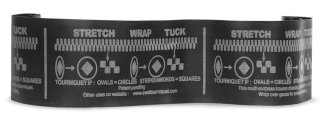
SWAT-Tourniquet (Stretch Wrap And Tuck / stretch, wrap and tuck).
The device is nothing more than a strip of elastic rubber 130 cm long and 10.5 cm wide, printed with diamonds and ovals along its length. For correct application the diamonds must look like squares when stretched. The tourniquet is fixed by tucking the end under a loop.
CAT-Tourniquet (Combat Application Tourniquet / combat application tourniquet).
An improved classic windlass tourniquet made of plastic. Twisting the inner strap creates pressure on the limb and major vessels until bleeding stops. It consists of a synthetic strap with an adhesive (velcro) coating, an inner strap, a buckle, a windlass clip and the windlass itself. With practice it can cut off blood flow with one hand in 30 seconds
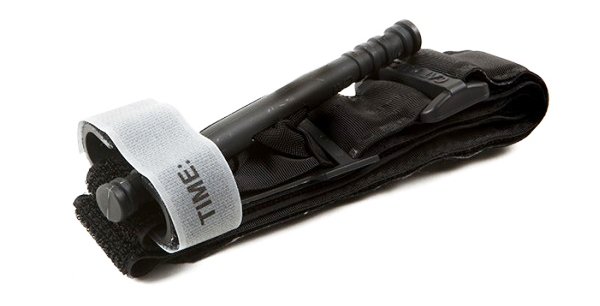
CAT-Tourniquet (Combat Application Tourniquet / combat application tourniquet).
An improved classic windlass tourniquet made of plastic. Twisting the inner strap creates pressure on the limb and major vessels until bleeding stops. It consists of a synthetic strap with an adhesive (velcro) coating, an inner strap, a buckle, a windlass clip and the windlass itself. With practice it can cut off blood flow with one hand in 30 seconds
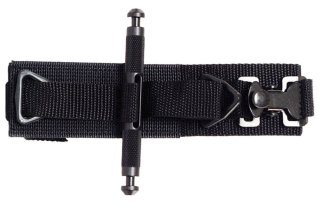
SOF-Tourniquet (Special Operation Forces Tourniquet / special operations forces tourniquet).
An improved classic windlass tourniquet with metal parts. It consists of a wide synthetic strap, a trapezoidal buckle with a wide hook and a sliding bar, a windlass-fix triangle, and the windlass itself. Its design allows the tourniquet to be fixed quickly on a limb and blood flow to be stopped with one hand.
MA-Tourniquet (Mechanical Activated Tourniquet / mechanically activated tourniquet).
Developed for the U.S. Department of Defense and later adopted by rapid-response services. Shaped like a C-hook, it consists of a synthetic strap, a buckle, a rotary mechanism and a semicircular windlass lever. It closes quickly around a limb, even with one hand, and the rotary mechanism lets you adjust compression and quickly loosen the tourniquet if needed.
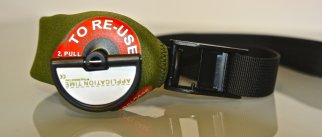
MA-Tourniquet (Mechanical Activated Tourniquet / mechanically activated tourniquet).
Developed for the U.S. Department of Defense and later adopted by rapid-response services. Shaped like a C-hook, it consists of a synthetic strap, a buckle, a rotary mechanism and a semicircular windlass lever. It closes quickly around a limb, even with one hand, and the rotary mechanism lets you adjust compression and quickly loosen the tourniquet if needed.
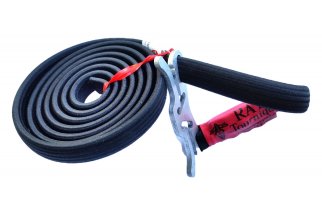
RATS (Rapid Application Tourniquet System / rapid application tourniquet system)
The tourniquet is a flat cord of strong vulcanized rubber in a nylon sheath, 121 cm long and 0.6 cm wide, attached at one end to an aluminum lock. It is wrapped around the limb and the free end is passed through the lock hole, forming a self-tightening loop (lasso). Each additional wrap increases the pressure (as with an “Esmarch” tourniquet).
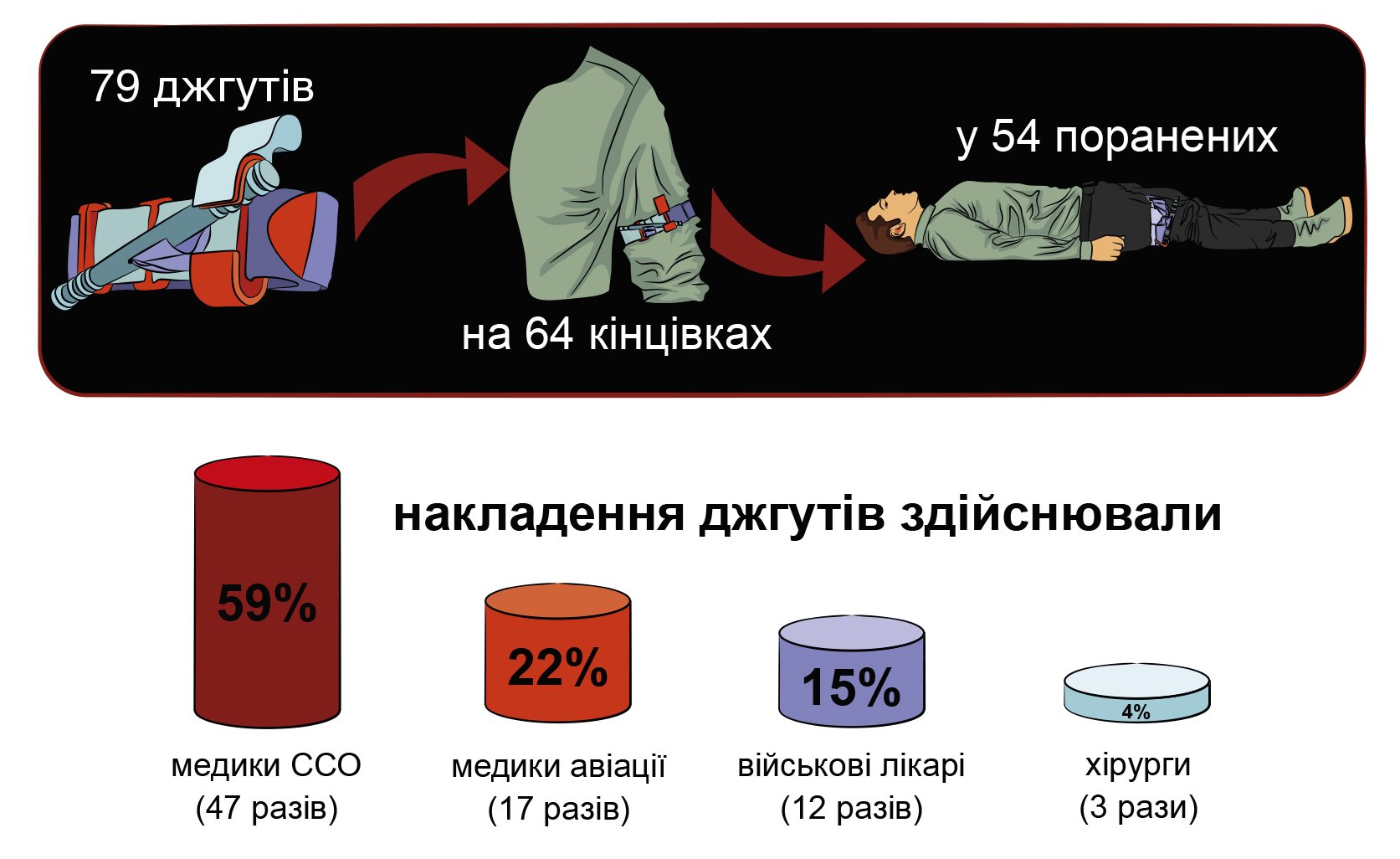
In 2011 a study covered 79 tourniquets applied to 64 limbs in 54 casualties.
47 times (59%) they were applied by special-operations medics;
17 times (22%) by aviation medics;
12 times (15%) by military doctors;
3 times (4%) by surgeons.
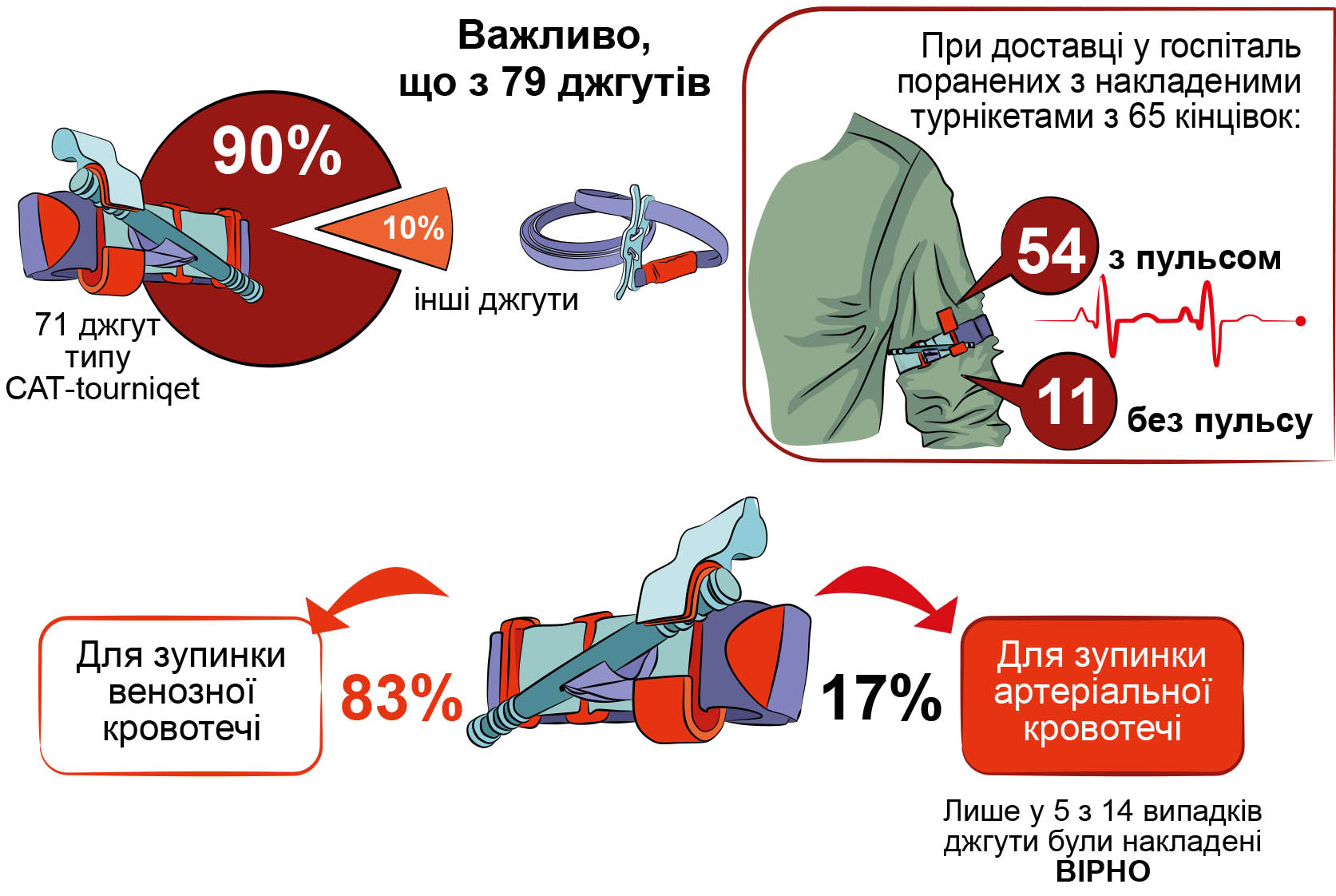
Importantly, 71 of the 79 tourniquets (90%) were of the CAT type.
When casualties with tourniquets arrived at hospital, 54 of 65 limbs had a pulse and 11 did not. Tourniquets had been used for venous bleeding in 83% of cases and for arterial bleeding in 17%. In only 5 of 14 arterial cases were the tourniquets applied correctly.
These statistics were published in the journal “JSOM” in 2013.
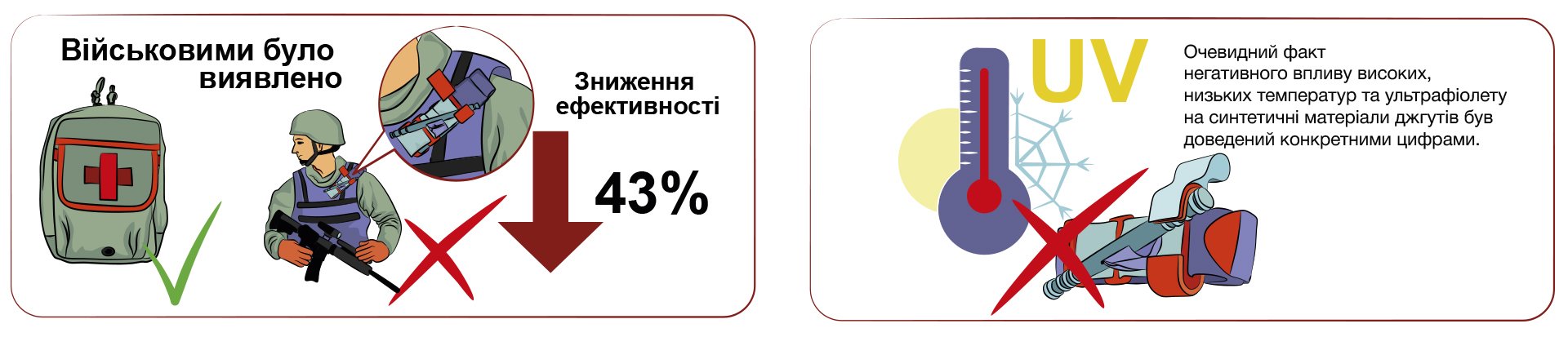
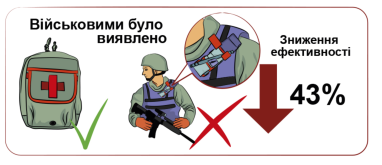
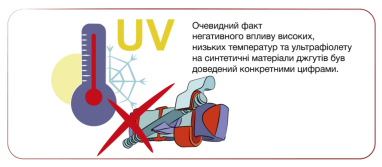
That same year, 2013, Military Medicine published the results of field tourniquet tests from February–May 2010 by the 1st Battalion, 6th Marines. The troops found that carrying tourniquets outside the individual kit — on the chest or plate carrier — for several months reduced their effectiveness by 43%. The obvious negative effect of high and low temperatures and UV on the synthetic materials of tourniquets was thus confirmed with hard numbers.
Europe was not left out of the development of tools for quickly stopping critical bleeding. The annexation of Crimea and the war in eastern Ukraine strongly influenced the development of military field (tactical) medicine in Europe and worldwide. In just a few years Ukrainian military medicine went from total decline to a rapid rebirth. In the first year of the war, tactical medicine was taught mostly by foreign and Ukrainian volunteer medics, and soldiers’ kits and medic bags were stocked to 50-year-old standards; within about three years the country was producing modern bleeding-control tools and sharing unique field experience with the world. Constant fighting with limited materiel and the deaths of tens of thousands of military and civilians pushed Ukrainian medics, chemists and volunteers to develop and produce their own effective, affordable mechanical and chemical hemostatics.
So in 2015, after laboratory tests and hundreds of field trials, a Ukrainian kaolin chemical hemostatic was put into production — substantially more effective than the well-known American “QuikClot” — along with a windlass hemostatic tourniquet – the SICH-Tourniquet, an improved and reinforced hybrid of the world’s two most common tourniquets, the CAT and the SOF-T.
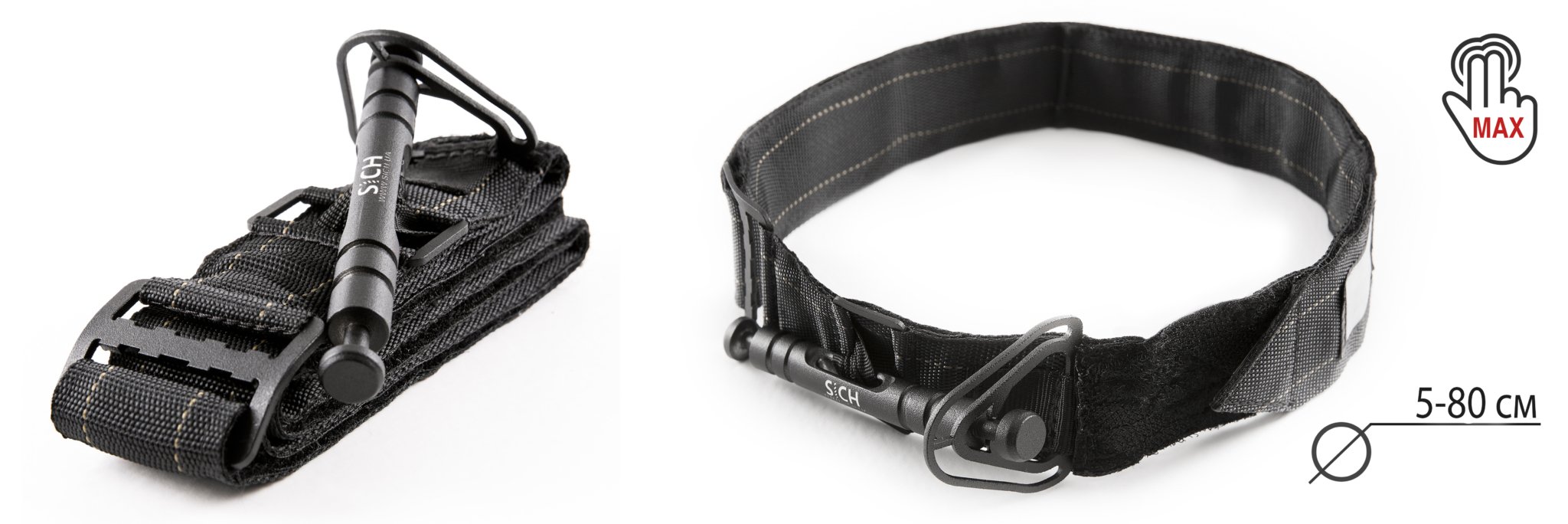
SICH-Tourniquet (Strengthened Individual Combat Hybrid Tourniquet / reinforced individual combat hybrid tourniquet).
A metal-reinforced hybrid tourniquet. Thanks to aluminum hardware, a special patented adhesive strap, one-piece construction and an internal telescopic platform, this unique tourniquet withstands double overloads, works when blood-soaked or dirty, in diesel or mud, does not lose effectiveness at extreme temperatures (-40 / +50 °C), and does not pinch soft tissue when applied. It can also be applied quickly with one hand.
In the summer of 2015, independent users and experts (medics, volunteers, military) ran extensive tests of tourniquets from all Ukrainian makers then available and of Chinese CAT counterfeits. The SICH-Tourniquet took first place and later became the official tool in Armed Forces of Ukraine kits built to the NATO model, as well as National Guard and Police kits, and is used by ambulance crews in cities across Ukraine.
At the end of 2018, volunteers of the Ukrainian charitable foundation “Vilni UA” initiated and organized a thorough study of Ukrainian- and U.S.-made hemostatic tourniquets.
At the state enterprise with international certification “UKRMETRTESTSTANDART”, qualified staff and TCCC instructors conducted a broad study of the functionality, strength and reliability of modern hemostatic tourniquets.
It is no exaggeration to say that tests of this kind had never been done before, not only in Ukraine but anywhere in the world.
The tests checked the ability of tourniquets to maintain a relatively constant pressure on a limb (350-300 mmHg) for two hours under the following conditions:
- at room temperature (24 °C +/- 7 °C), dry;
- at room temperature (24 °C +/- 7 °C), wet;
- at room temperature (24 °C +/- 7 °C), soaked in diesel fuel;
- after pre-freezing the sample to -40 °C;
- after pre-heating the sample to +50 °C.
The best results were shown by the SICH and CAT7 tourniquets, with SICH performing better at low and high temperatures:
More details, protocols and test videos at the link.
One of the best-known medical protocols for prehospital care in combat is the TCCC protocol (TC3 – Tactical Combat Casualty Care), developed in 1996 by the U.S. military medical service.
Action algorithm under TCCC:
MARCH PAWS
1 – Massive Hemorrhage (control of massive bleeding).
2 – Airways (airway).
3 – Respiration (breathing).
4 – Circulation (circulation).
5 – Head Injury | Hypothermia (head injury, hypothermia)
6 – Pain (pain)
7 – Antibiotics (antibiotics)
8 – Wound (wounds)
9 – Splinting (splinting)
The protocol also requires:
- an easily accessible tourniquet location on the soldier that is the same for the whole unit;
- that care for the casualty be given only with tools from their individual kit (bleeding is stopped with the casualty’s own tourniquet);
- mastering tourniquet application by automaticity, on oneself and on a partner;
- that a soldier’s kit contain a mechanical tourniquet (CAT, SICH, SOF-T), hemostatics (QuikClot, Celox gauze), a pressure bandage or elastic bandage, a nasopharyngeal airway, an occlusive dressing, a survival blanket, tactical shears, cloth tape, a marker, nitrile gloves and a pill-pack.
The tourniquet – the first and most effective means of stopping bleeding
Applying a tourniquet and cutting off blood flow is one of the most important first-aid actions for bleeding from major vessels of the limbs.
A tourniquet applied too late causes the victim’s death in most cases.
But it is precisely the tourniquet, together with the right skills, that saves a soldier’s life on the battlefield or a civilian’s in a critical situation (road accident, assault, accident, etc.).
New-generation mechanical tourniquets (SICH, CAT, SOF-T) can be applied effectively in 10–30 seconds, alone and with one hand.
The technique for applying a hemostatic tourniquet varies with its design and with training. But the general rules remain the same:
- the tourniquet is applied above the wound at least 5 cm away (the width of three adult fingers);
- the area under the tourniquet must first be cleared of hard objects (empty pockets, remove chains, bandages, etc.);
- before use, soft material is placed between the body and the tourniquet (if it has none) to reduce pinching and soft-tissue necrosis. The SICH-Tourniquet is an exception: thanks to its design it does not create critical pinching and needs no extra material;
- the tourniquet is tightened until bleeding stops completely;
- the time of application must be written on the tourniquet itself (if the design allows) or in the accompanying documentation;
- only medical personnel may loosen or remove an applied tourniquet;
A correctly applied tourniquet – does not equal loss of the limb. That risk exists, however, if the tourniquet stays on for a long time and circulation in the limb is not restored. Acceptable occlusion time depends on many factors (physiology, ambient temperature, compression force and area, etc.). But the conventional “red line” not to cross is 2 hours.
Most often, loss of a limb is caused not by the tourniquet but by a complex gunshot or shrapnel wound with massive bleeding from extensive damage to soft tissue, major vessels, cartilage and bone. The high kinetic energy of a bullet core or mine (shell) fragment causes comminuted fractures, often with secondary damage to major vessels by bone fragments themselves.
In gunshot injuries of the limbs, special attention must be paid to the nature of the wound – through-and-through or blind. The exit hole may be far from the entry hole, and a wrong initial diagnosis can lead to critical blood loss and the casualty’s death during transport.
Armed conflicts do not cease around the globe and force the powerful of this world to seek diplomatic and military solutions. Effective tools in soldiers’ kits, alongside weapons and diplomacy, strengthen a state’s position on the international stage. That is why developed countries pay close attention to improving prehospital emergency care tools. And who knows — perhaps at this very moment, in the laboratories of leading institutes, a new revolutionary tool meant to save lives is being born.